

A Winter Lighthouse Road Trip Through Coastal Maine
Would you like to save this full guide?
When the summer crowds have gone home and the Atlantic winds turn sharp, Maine’s coast takes on a new kind of beauty — one you won’t find on postcards or Instagram feeds.
The beaches are empty, the air smells of salt and pine, and the lighthouses that have guarded these shores for centuries stand tall against the quiet.
Taking a winter road trip to explore Maine’s lighthouses is about more than just beautiful scenery. The cold air wakes you up, and the quiet gives you a chance to really listen to the waves.
As you journey from Portland to the MidCoast, you’ll find a landscape that feels both wild and calm, rough yet soothing.
Here’s how to plan the perfect winter lighthouse road trip through Maine — with plenty of warmth along the way.
Starting Point: Portland — The Gateway to Maine’s Lights
You can’t start a Maine lighthouse trip anywhere but Portland. It’s the heart of the coast — part working harbor, part foodie haven, part historic landmark.
Before you hit the road, spend a little time in the Old Port district. Grab a steaming mug of coffee from Bard Coffee or Coffee by Design, then point your car south toward Cape Elizabeth.
Within 15 minutes, you’ll be standing in front of one of the most photographed lighthouses in the world.
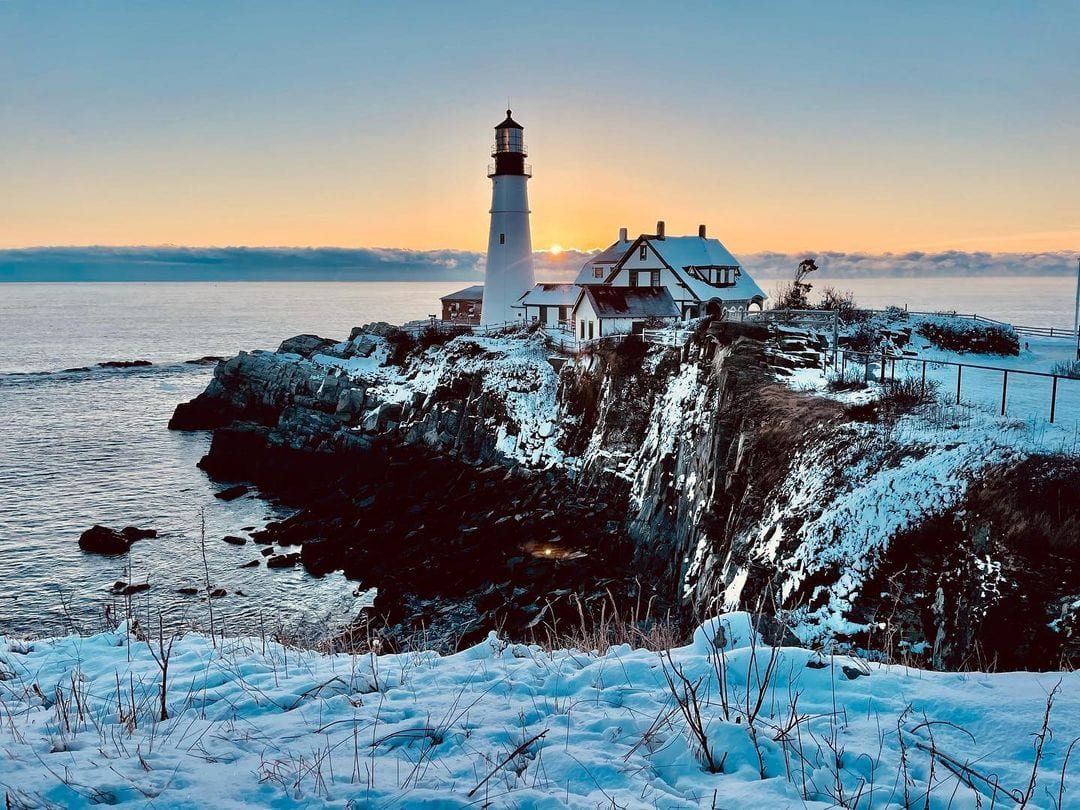
Portland Head Light | Cape Elizabeth
No matter how many times you’ve seen it, Portland Head Light still takes your breath away. Perched on the cliffs of Fort Williams Park, it’s Maine’s oldest lighthouse — and in winter, it’s hauntingly beautiful.
When snow dusts the rocky ledges and the Atlantic roars below, you understand why artists and poets have been drawn here for centuries. The park stays open year-round, so bundle up and walk the cliff path to watch waves crash against the rocks.
Local tip: The lighthouse closes for tours in winter, but C Salt Gourmet Market just up the road serves hot sandwiches and chowder, perfect for thawing out after your visit.
South Portland’s Smaller Lights
Across the harbor, two lesser-known lighthouses make great winter stops — both easy to reach and often overlooked.
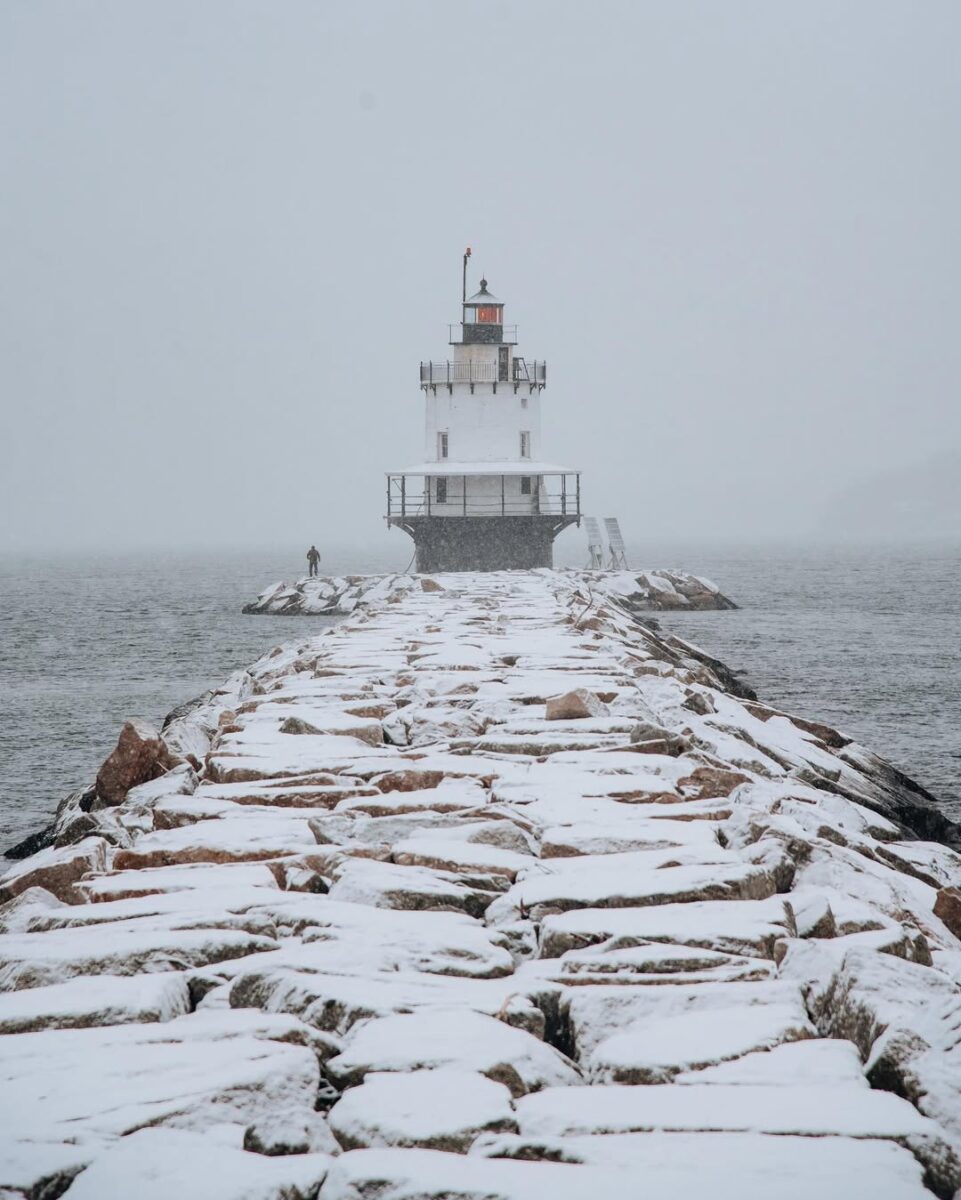
Spring Point Ledge Light
Located near the Southern Maine Community College campus, Spring Point Ledge Light sits at the end of a 900-foot granite breakwater. On a calm day, you can walk all the way out for panoramic harbor views, but be cautious — those stones turn slick when icy. Even from shore, it’s worth the stop.
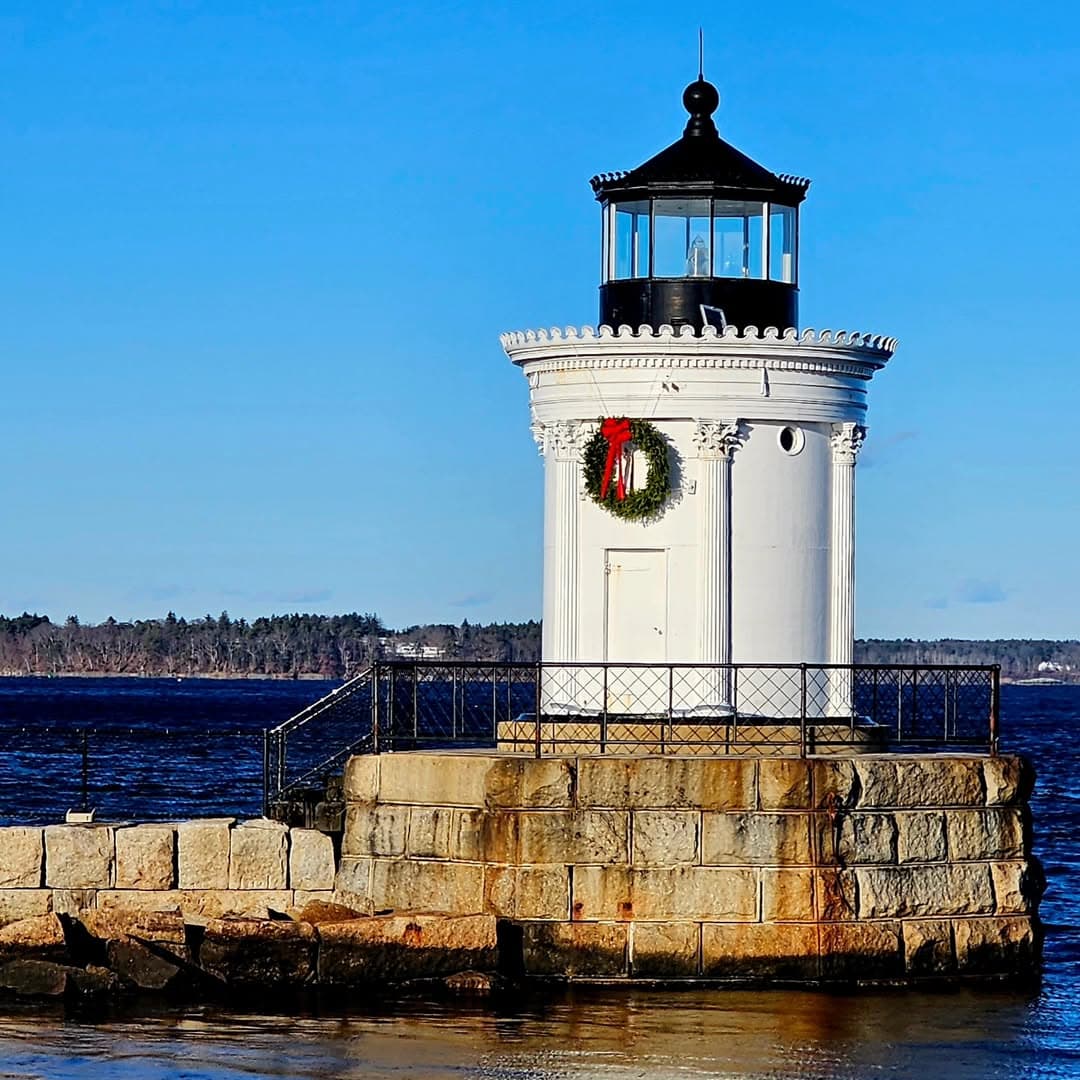
Bug Light (Portland Breakwater Light)
Just a few minutes away, Bug Light Park offers one of the best views of Portland’s skyline across the bay. The lighthouse itself is petite — just 26 feet tall — but elegant, modeled after a Greek monument. On clear days, the sunlight bounces off the frozen bay and gives the whole scene a silvery glow.
Warm-up stop: Scratch Baking Co. in South Portland — known for bagels that might ruin you for all others.
North to the Midcoast: Pemaquid Point
From Portland, head north on Route 1, one of New England’s most storied drives. The highway winds through pine forests, river crossings, and small towns that wear their history proudly — Wiscasset, Damariscotta, and Newcastle among them.
Your next major stop is Pemaquid Point Lighthouse, about two hours from Portland. This is the lighthouse that graces Maine’s state quarter, and once you stand on its rugged, wave-beaten cliffs, you’ll understand why.
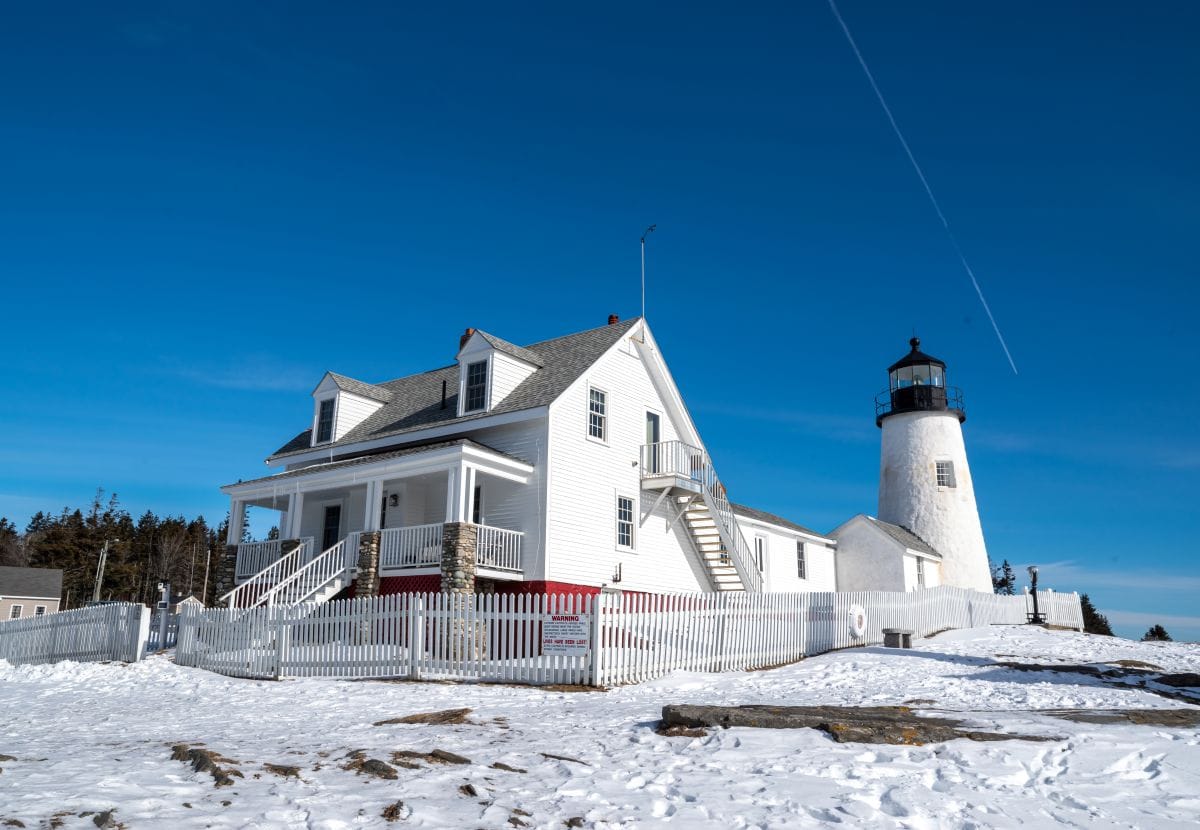
Pemaquid Point Light | Bristol
Even in winter, the park remains open for visitors. The museum and keeper’s house close for the season, but you can walk the grounds freely. The ledges here are some of the most dramatic on the Maine coast — tilted slabs of ancient rock that catch sea spray and ice like sculpture.
Bring your camera; winter light makes every photo look cinematic. And if you time it right, you might have the entire point to yourself.
Where to eat nearby: Moody’s Diner in Waldoboro is a Maine institution — the pie alone is worth the detour.
Marshall Point — A Scene Straight Out of the Movies
Continue north through the quiet fishing villages of St. George Peninsula until you reach Port Clyde. Here, perched at the edge of the world, stands Marshall Point Lighthouse — instantly recognizable to fans of Forrest Gump as the spot where he ended his cross-country run.
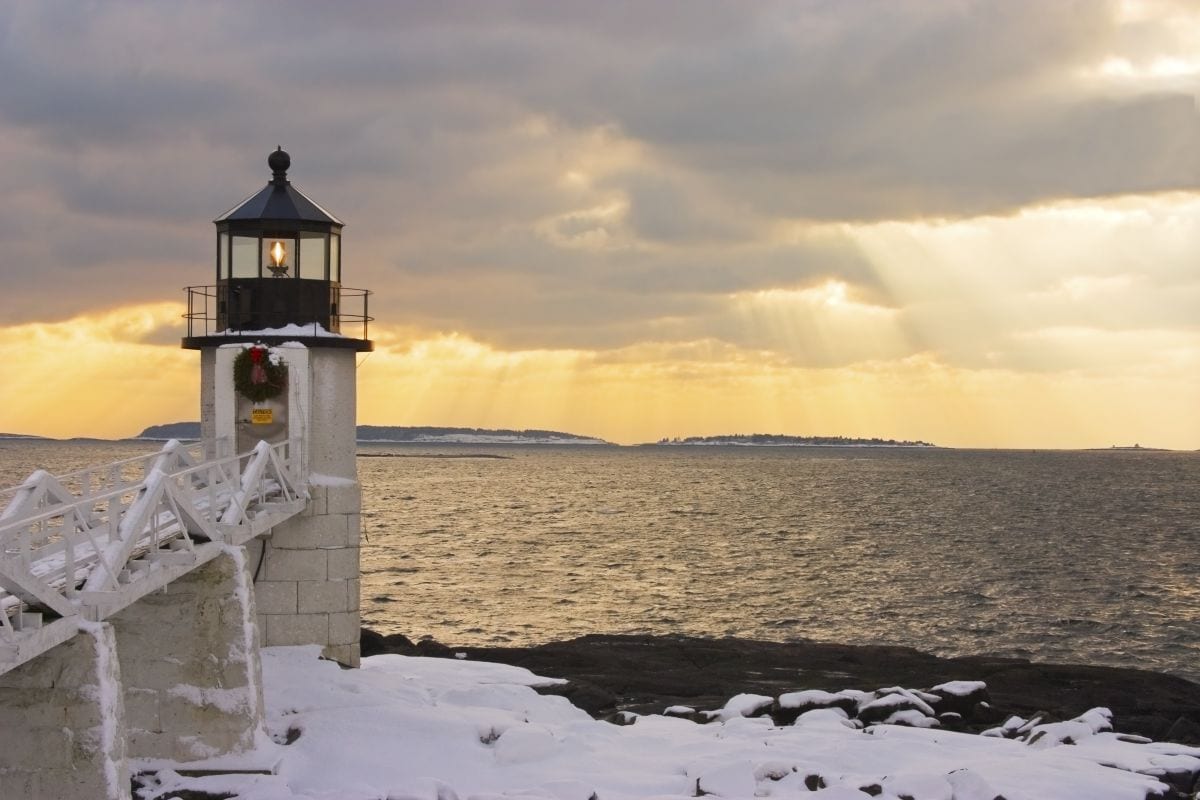
Marshall Point Light | Port Clyde
In winter, the boardwalk that leads to the lighthouse can be dusted with snow, but the view is unforgettable. The white tower against the dark ocean makes a perfect subject for photographers. You’ll often spot harbor seals bobbing offshore.
If you visit in the late afternoon, the sunset lights up the water in shades of rose and gold.
Nearby stops: Grab coffee or lunch at Tenants Harbor General Store, one of the few places open year-round.
Rockland & Owls Head — Lighthouse Country
From Port Clyde, it’s a short drive to Rockland, one of Maine’s most charming small cities and a perfect overnight stop. In winter, the streets are quiet, but the town doesn’t hibernate. Art galleries, coffee shops, and harbor restaurants keep the lights on even in the off-season.
Check into a cozy inn — 250 Main Hotel offers water views and heated floors — and spend the evening exploring the downtown.
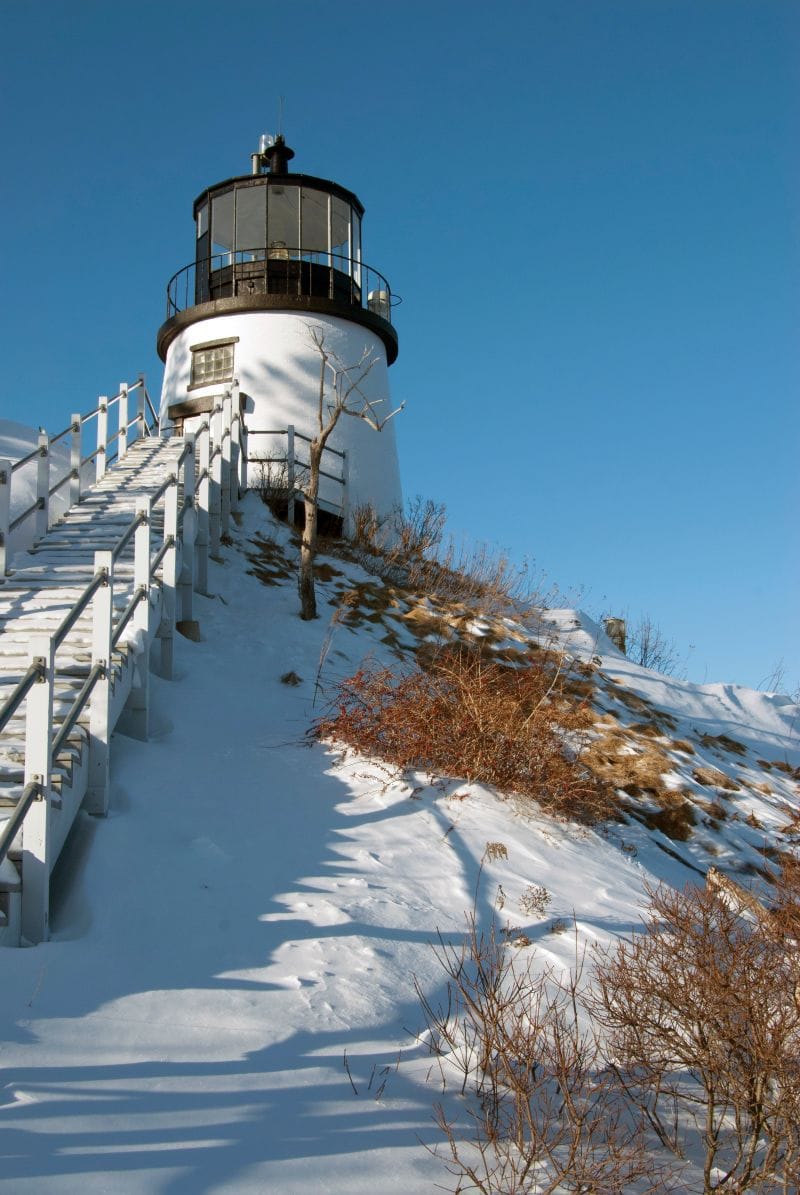
Owls Head Light | Owls Head State Park
Just outside Rockland, this small lighthouse stands high above the mouth of Rockland Harbor. The walk from the parking area to the tower is short but steep. The view from the top — the bay spread out below, the Camden Hills rising in the distance — might be one of the best in Maine.
Winter adds its own touch here: the sea smokes on cold mornings, and the trees around the lighthouse wear a shimmer of frost.
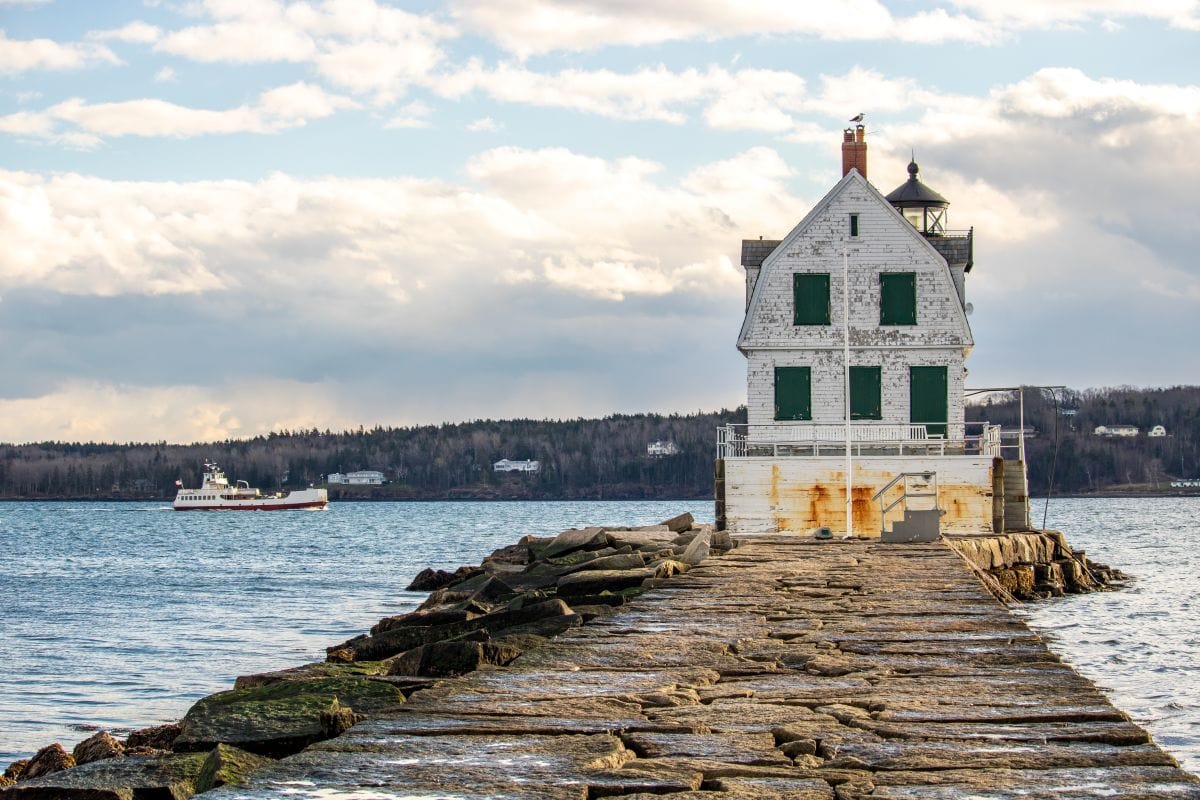
Rockland Breakwater Light
A mile-long granite breakwater stretches from the harbor’s edge to this sturdy red-brick light. In summer, it’s a popular walk; in winter, it’s an adventure. The rocks can be icy, so step carefully — or simply admire the view from the shore along the Rockland Harbor Trail.
Either way, this stop reminds you why Maine’s coast is so iconic: rugged, enduring, a meeting of human craftsmanship and natural power.
Local flavor: Warm up afterward at Home Kitchen Café for a plate of huevos rancheros or one of their famous sticky buns.
Optional Northern Extensions
If you’re not ready to head back, continue your journey another 45 minutes north to Camden and Belfast. The lighthouses thin out, but the scenery grows even more dramatic. Camden Hills State Park stays open for winter hiking, and Mount Battie offers a panoramic view of Penobscot Bay that’s nothing short of spectacular.
Planning Tips for a Winter Lighthouse Road Trip in Maine
1. Watch the weather.
Maine’s coastal roads are well-maintained, but storms can roll in fast. Check forecasts and have a flexible plan.
2. Start early.
Daylight fades quickly in winter — sunset can come before 4:30 p.m. Use the mornings for lighthouse visits and the afternoons for leisurely drives or cozy café stops.
3. Dress for the elements.
Even on calm days, the wind near the water cuts deep. Layers are your friend: thermal base, fleece mid-layer, and waterproof shell. Add microspikes if you plan to walk on icy trails or breakwaters.
4. Bring a thermos and snacks.
Many seasonal cafés close by late fall, especially north of Bath. Keep some coffee, soup, or cider handy — you’ll thank yourself at the next windy overlook.
5. Stay flexible.
Part of the magic of a Maine winter road trip is following your curiosity — turning down side roads, stopping at unexpected overlooks, watching snowflakes drift across the harbor.
Why Road Trip in Winter?
Maine’s lighthouses in winter aren’t picture-perfect in the traditional sense. They’re stark, solitary, weather-worn — and more real for it. Visiting them in the off-season lets you experience the Maine coast as it truly is: powerful, quiet, and honest.
You’ll hear the crunch of snow underfoot, the crash of distant surf, and the low call of a gull somewhere out in the fog. You’ll stand where keepers once watched storms roll in, lanterns glowing against the dark.
And when you return home, you’ll find that Maine’s light — steady, unwavering, and a little wild — has a way of staying with you.