
The Peculiar case of Fort Gorges off the coast of Portland Maine
Would you like to save this full guide?
We’d like to tell you that Casco Bay’s Fort Gorges was the site of heroic battles, housing some of the greatest heroes in American history. We can’t, however, because its claim to fame is more about what didn’t happen there than what did.
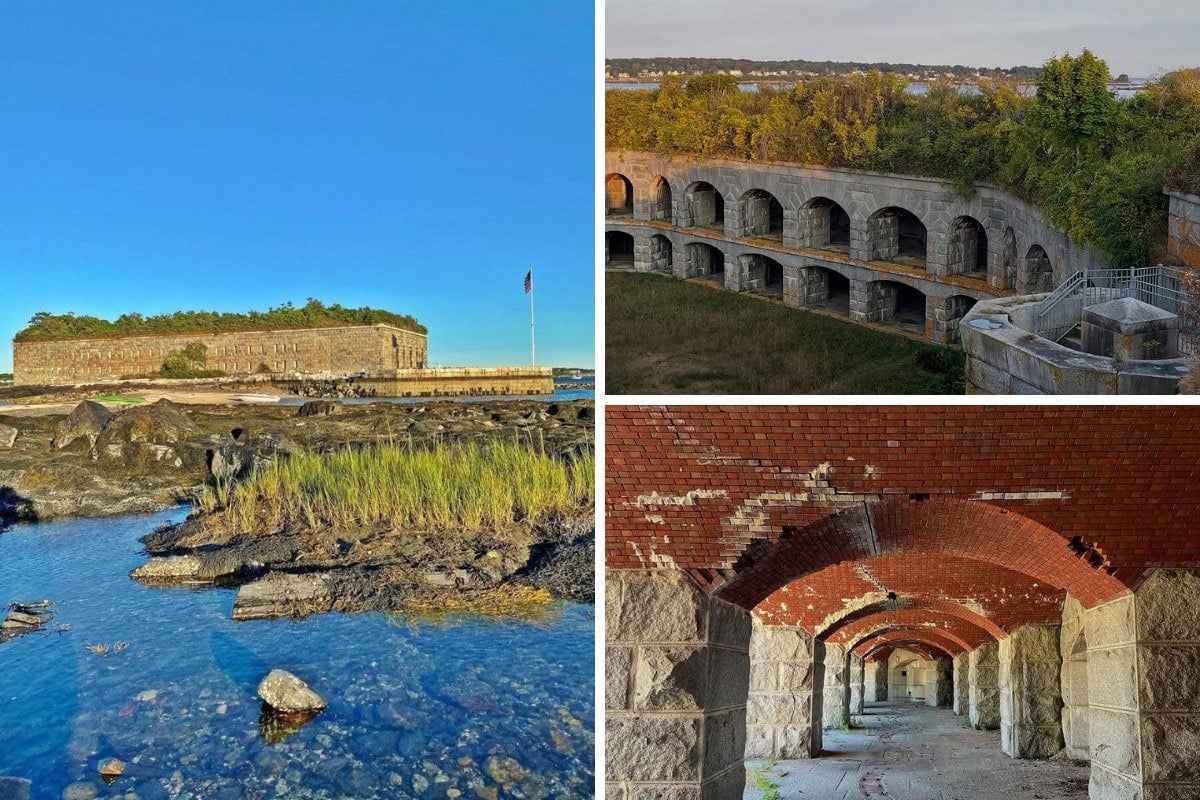
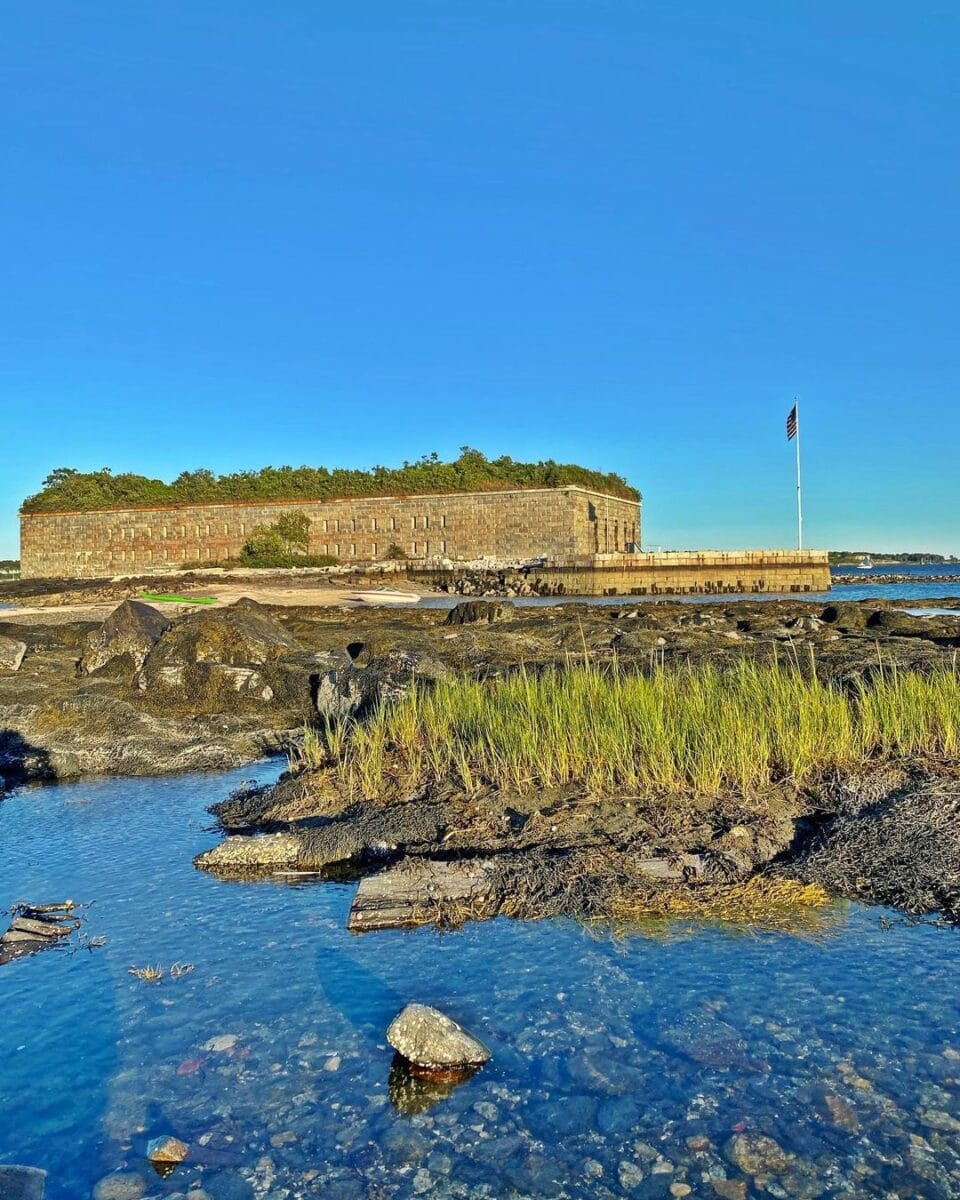
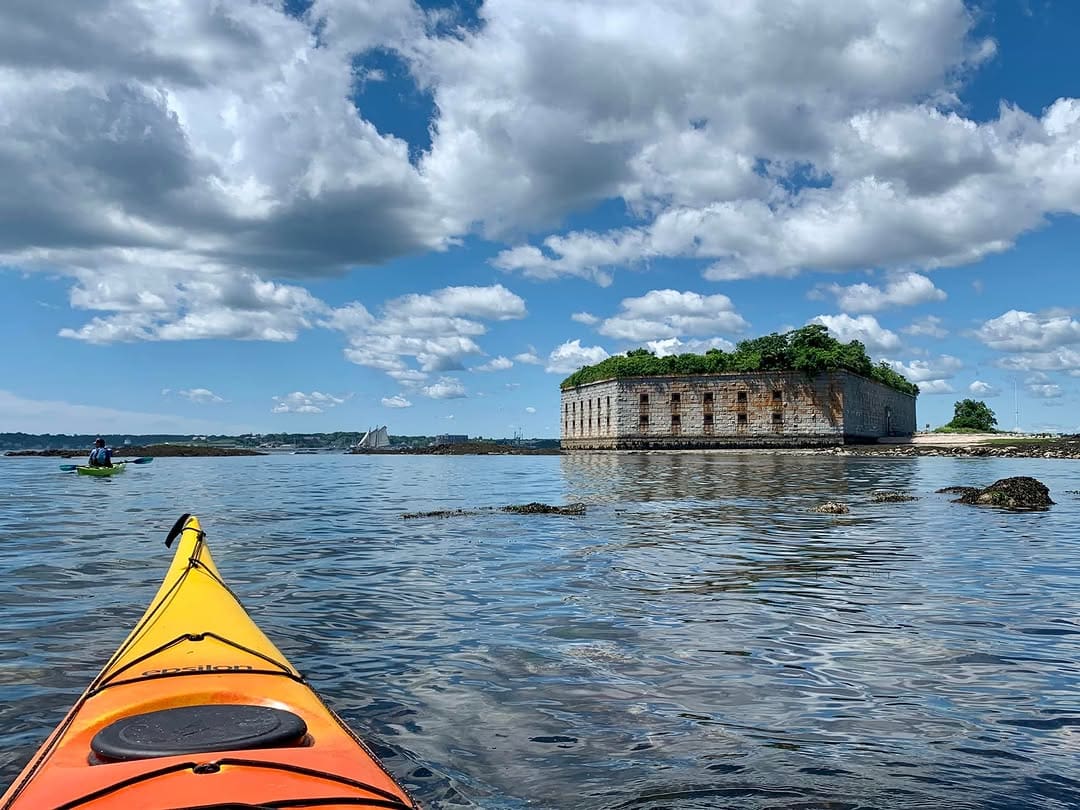
Still, Fort Gorges (sounds like “gorgeous”) draws attention from the Portland shoreline, since it appears to float on water at high tide. It appears to be a ghost fort, holding potential for what could’ve been and a lot of history you might never know until you make the watery trek to explore its walls.
We’re going to give you a preview and a history lesson of Fort Gorges on Hog Island Ledge in Portland, Maine. Plus, we’ll spill the secrets of a shipwreck just off its rocky shoreline.
Where Is Fort Gorges?
Fort Gorges sits on Hog Island Ledge, in Casco Bay, about a mile from the Portland shoreline. It’s on a rocky outcropping connected through shallow water to Diamond Island Ledge. If you look at the map, you’ll see Fort Gorges about halfway between Fish Point and Little Diamond Island.
History of Fort Gorges
What is it they say about best laid plans? Fort Gorges started out as an excellent idea, but fell into bad timing, delays, and was at the mercy of technological advancements that nobody saw coming.
War of 1812: The Wake-Up Call
The War of 1812 was a wake-up call for coastal Maine. British forces sailed straight into the Gulf of Maine, captured Eastport, occupied Castine, and made it painfully clear that Portland Harbor was vulnerable. In response, the U.S. rushed to strengthen its defenses.
Fort Preble was built on the mainland in South Portland, and Fort Scammel on House Island was heavily reinforced. Together, they formed the harbor’s first serious line of defense, meant to keep enemy ships from sailing straight into Portland.
Fort Gorges was planned in response to this weak spot, but it would be decades before it rose up from the rocky outcropping of Hog Island Ledge. Fort Gorges was named after Sir Ferdinando Gorges, an English nobleman and one of the earliest champions of settling what would become Maine.
Mid-1800s: The Grand Defense Plan
That fear turned into a three-fort system designed to block any hostile ship from reaching Portland. Fort Preble guarded the mainland in South Portland. Fort Scammel took position on House Island.
The post-War of 1812 plan called for Fort Gorges to be built right in the middle of the shipping channel. The idea was simple. Trap hostile ships in overlapping cannon fire before they ever reach Portland.
On paper, it was a brilliant fix. In practice, building a massive granite fortress on a wave-battered rock in open water proved expensive, complicated, and slow. Funding stalled, designs evolved, and priorities shifted, delaying construction for decades.
Civil War Era: Perfect Timing, Wrong War
Congress didn’t earmark the funds for Fort Gorges until 1857. Construction was sped up when the Civil War started. However, no speed of completion could overcome the rapidly growing war technology. By the time it was finished in the late 1860s, it was obsolete.
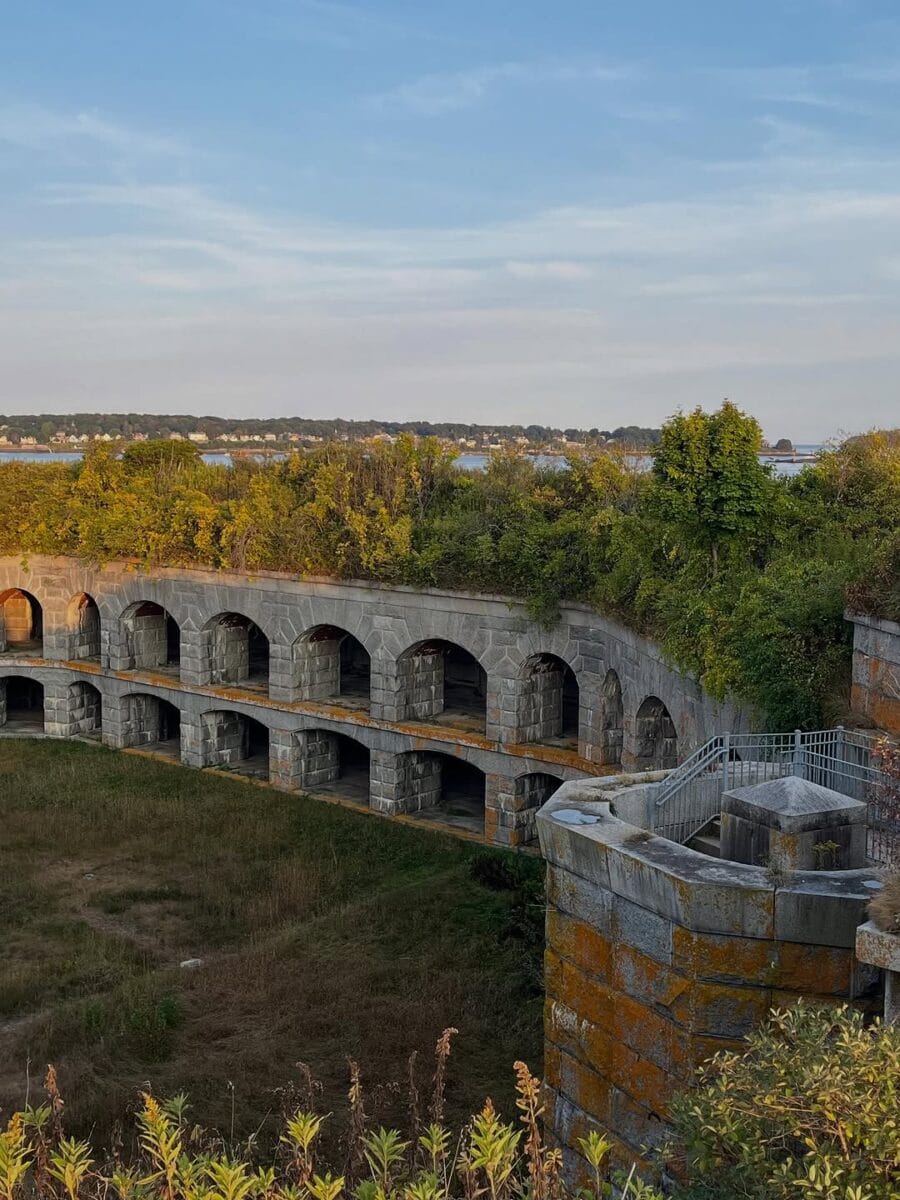
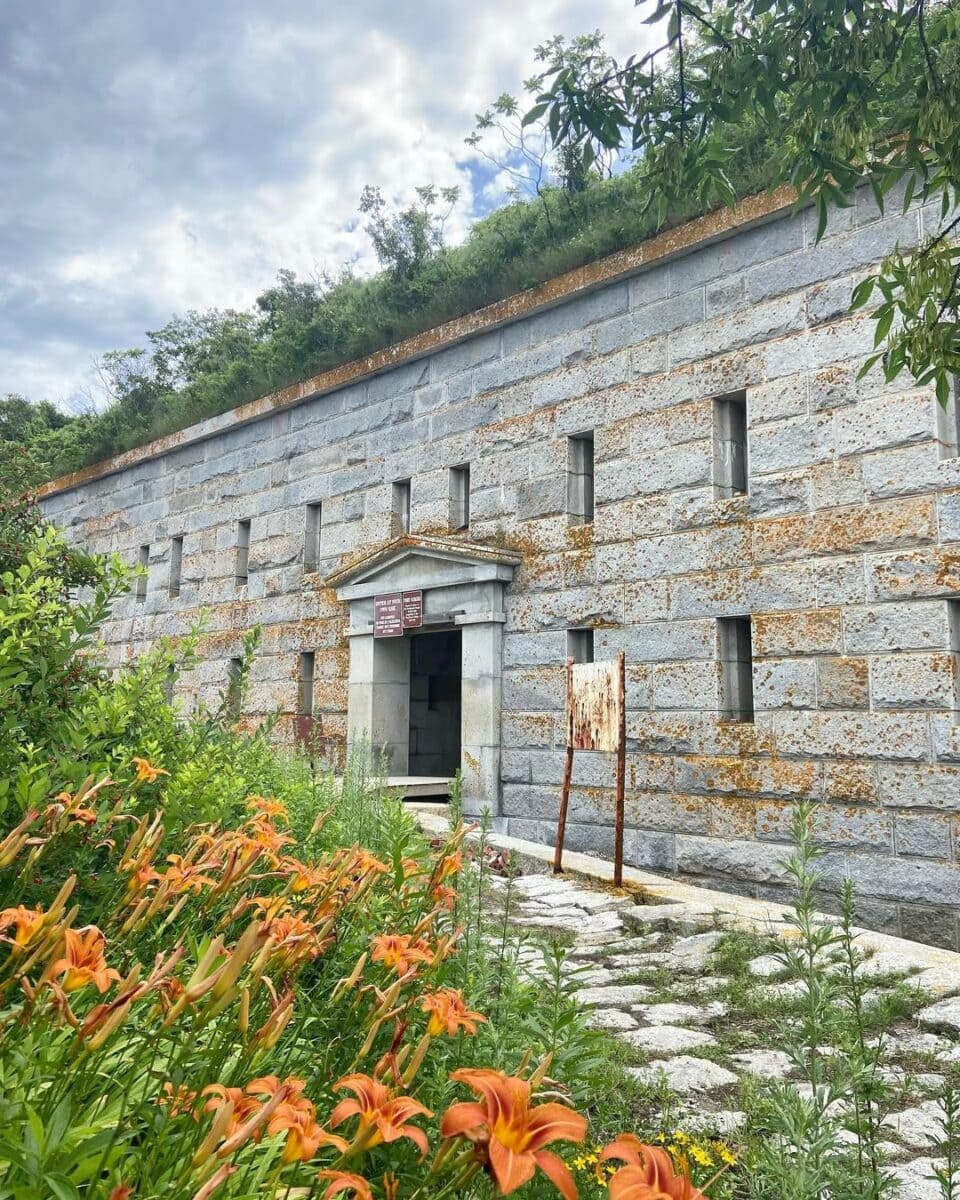
Even a new modernization plan around 1870 proved pointless. The third story, never built, was capped with dirt as a buffer. That’s now overgrown shrubs, trees, and other out-of-control vegetation eating at the walls of the fort beneath it. Fort Gorges ended up being a very expensive proverbial insurance policy that never had to file a claim.
Early 1900s: Quiet Retirement
Fort Gorges never saw war. It was never staffed with a full military garrison or fully armed as a frontline defense, either.
After the Civil War, Fort Gorges settled into a quieter role that matched its no-drama reputation. It stayed under military control, but instead of guarding the harbor, it became a storage site for ammunition, supplies, and equipment, along with an occasional training outpost. During World War I and World War II, it was loosely reactivated as a coastal observation and support station, more about preparedness than actual defense.
The city of Portland took it over in 1960, earning it a spot on the National Register of Historic Places.
Modern Day Fort Gorges
When Fort Gorges transferred to the city, it was largely left to the elements. Decades of wind, salt, waves, and curious visitors slowly took their toll, turning the fort into both a local legend and a slow-motion preservation challenge.
Restoration efforts began in earnest in the early 2000s, led by the nonprofit Friends of Fort Gorges, with a focus on stabilizing the structure, repairing masonry, and preventing further decay. That work continues today, balancing public access with preservation, and keeping this harbor landmark standing for future generations.
The Shipwrecks of Fort Gorges, Hog Island Ledge, and Diamond Island Ledge
Long before Fort Gorges existed, Hog Island Ledge and nearby Diamond Island Ledge were already notorious marine hazards, acting like submerged speed bumps in the middle of a busy shipping channel.
Poor visibility, shifting tides, fog, and tight navigation led to a steady stream of groundings and wrecks throughout the 1700s and 1800s, including fishing vessels, schooners, and cargo ships that misjudged the narrow passage. Even after the fort was built, the ledges kept claiming victims.
One of the harbor’s most famous wrecks did not hit rock at all. The Edward J. Lawrence, a large schooner, caught fire in 1898 and was deliberately scuttled between Fort Gorges and Little Diamond Island.
That spot remains a tricky stretch of water, and today the wreck draws experienced divers hunting for a mix of history and underwater adventure.
How to Access Fort Gorges
Despite the fact that the walls are eroding from the outside elements and the weight of the unkempt foliage on top of it, Fort Gorges is still open to adventurous visitors.
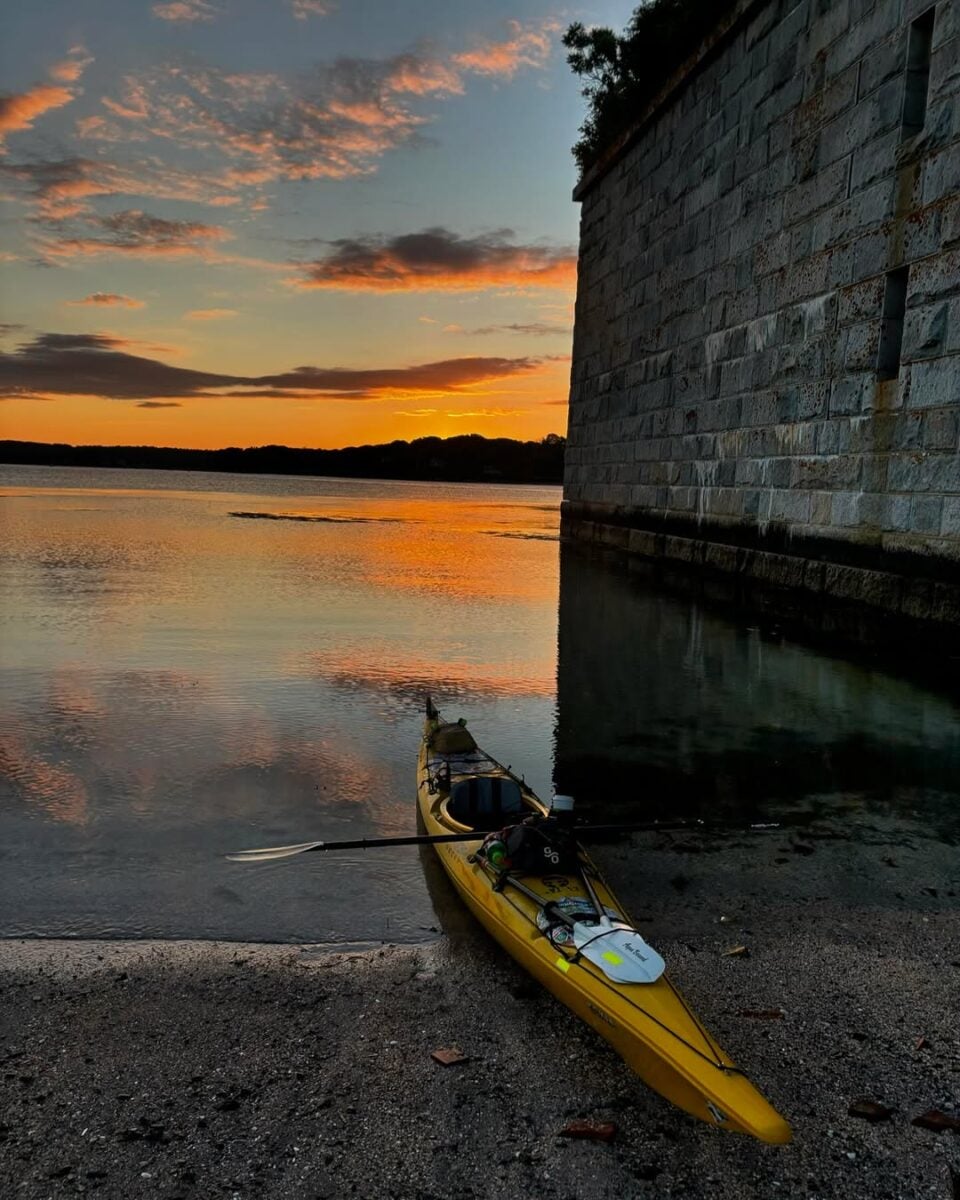
There’s no bridge, ferry, or tidy little dock to access Fort Gorges, so you’ll need your own boat, kayak, or paddleboard. Most people launch from East End Beach, Peaks Island, or nearby marinas, then time their trip with the tides and calm weather. Look at joining a Portland Paddle Tour if you don’t want to venture out solo.
We also recommend checking the tour schedule through the Friends of Fort Gorges. All proceeds go to protect this landmark.
The Layout of Fort Gorges
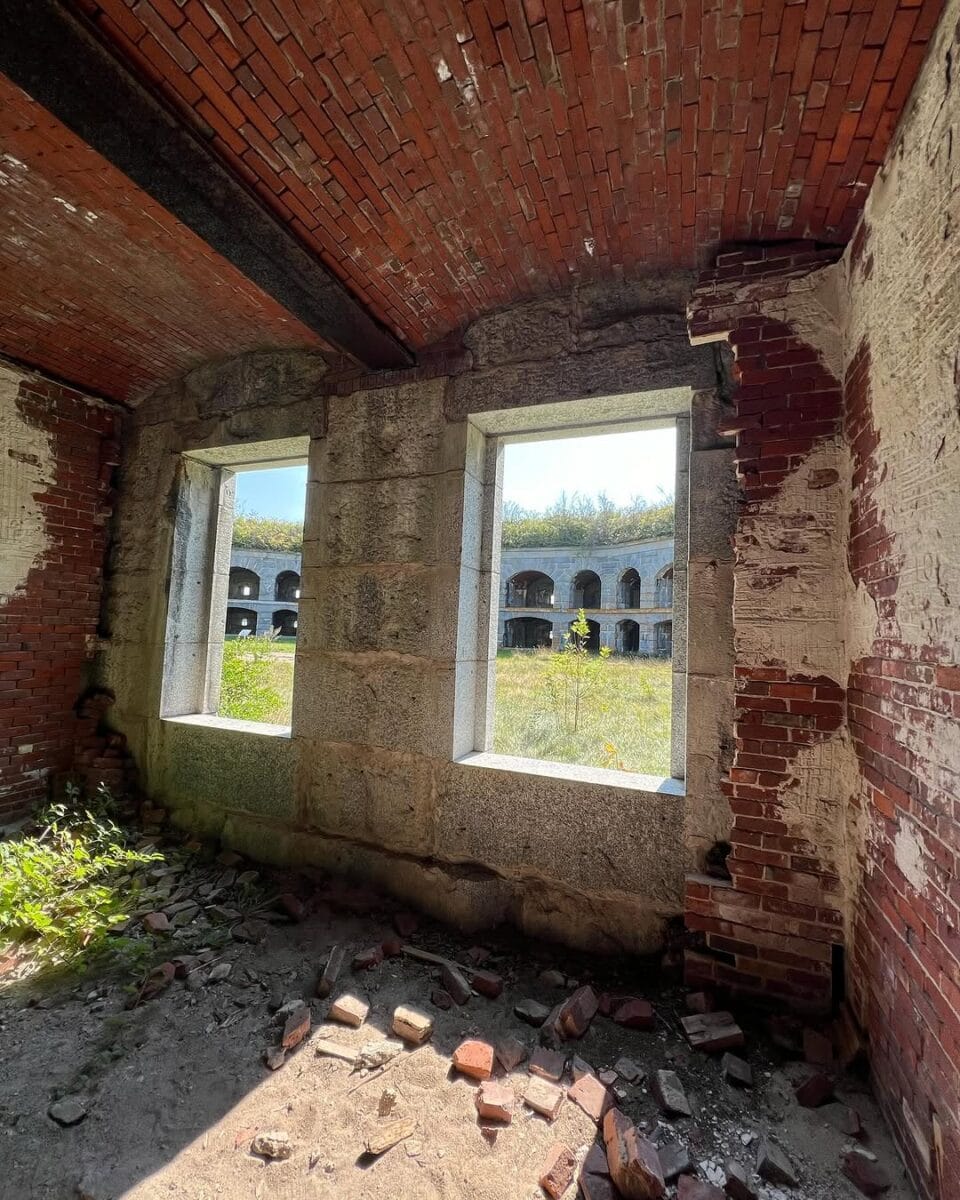
Fort Gorges was designed in the same general style as Fort Sumter, using a circular layout, thick granite walls, and stacked interior levels built to hold cannons, ammunition, and troops.
The design was meant to maximize firepower while protecting soldiers inside, even if the fort never got the chance to test that theory. Today, visitors explore that original layout, which makes wandering through it feel like stepping inside a 19th-century time capsule.
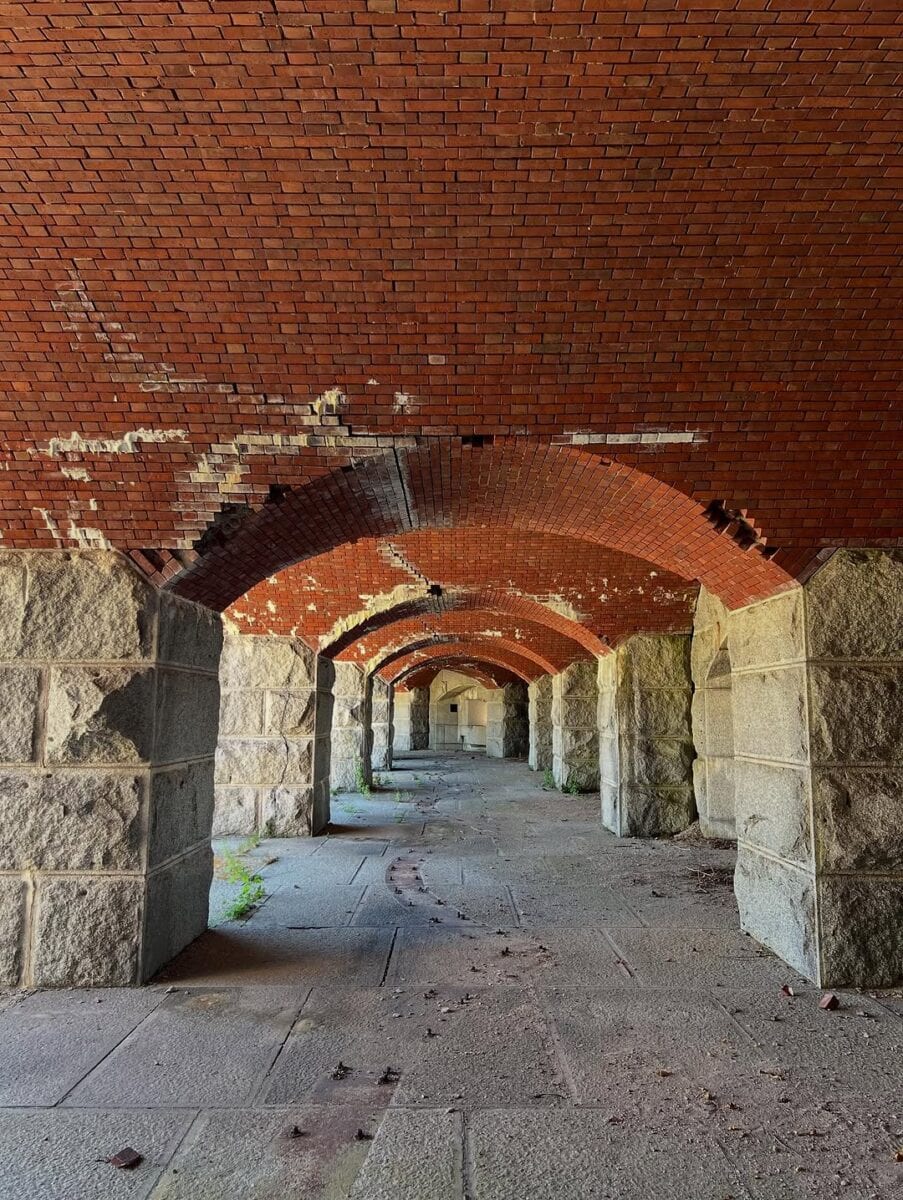
Once you land, expect steep stone steps, echoing brick corridors, wide-open parade spaces, and harbor views that make the climb worth it.
Things you’ll see inside the fort include:
- Arched brick passageways and underground rooms
- Cannon ports facing every direction of the harbor
- Former ammunition storage areas and supply rooms
- Central courtyard and interior parade ground
- Upper levels with panoramic views of Casco Bay
Bring sturdy shoes, a flashlight, and curiosity. This is not a polished museum experience. It is a real, slightly wild, walk-through piece of coastal history.
More Forts to Explore in Casco Bay
Casco Bay is basically a floating museum of old coastal defenses, and several of its forts are easy to visit.
Fort Williams in Cape Elizabeth offers one of the state’s main attractions. It is home to Portland Head Light, walking trails, picnic spots, cliffside ocean views, and wide-open green space. You can wander the old fort structures, explore the tunnels, and take in one of the most photographed lighthouses in America.
Fort Preble, also in South Portland, is now part of Southern Maine Community College. The fort buildings are still standing and visible, though access is more limited. You can walk the campus and check out the historic remains with great harbor views.
Fort Scammel on House Island is accessible by private boat or seasonal tours through Fortland. It is more intact than most, with guided visits that include underground rooms, tunnels, and sweeping harbor views.
Battery Steele on Peaks Island offers massive concrete bunkers, ocean views, and easy walking access from the ferry dock. It is one of the most dramatic World War II-era sites in the bay and wildly fun to explore.
Between them, Casco Bay serves up enough military history to keep any fort fan happy. However, Fort Gorges is one of those must-see locations if you’re up for an adventure.