
This Tiny Maine Bridge “Wiggles” When You Walk Across It | York’s Wiggly Bridge
Would you like to save this full guide?
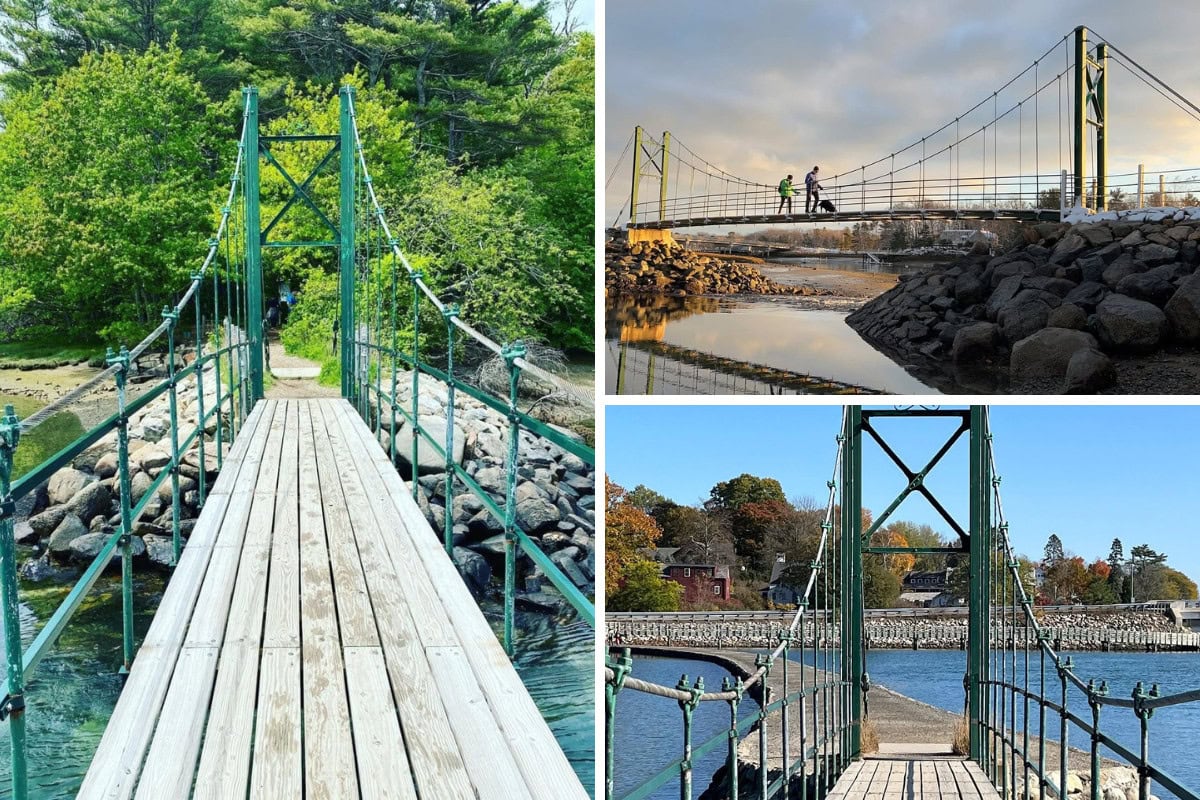
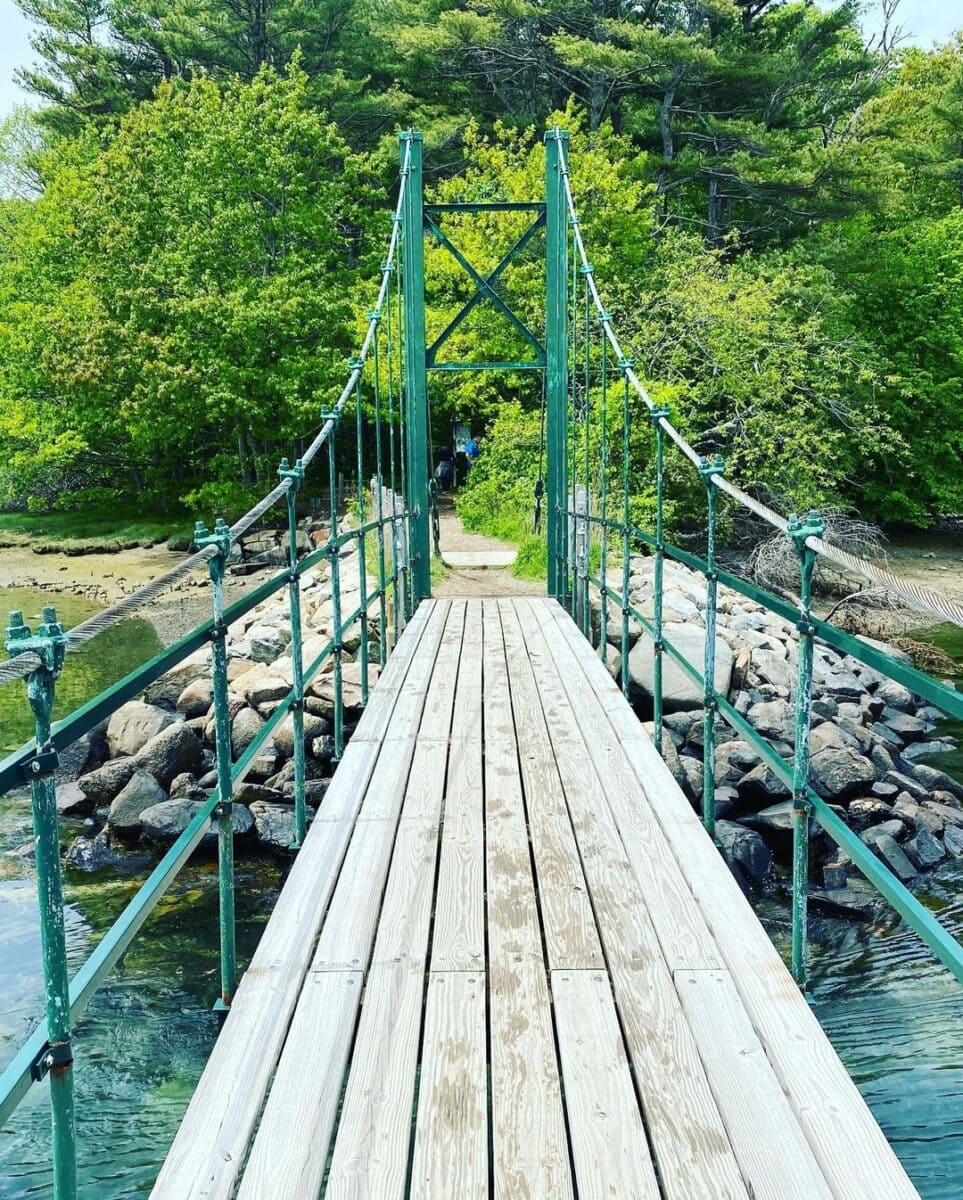
The Wiggly Bridge of York might be small in stature, but it’s a place of big dreams in this historic community on Maine’s coastline. Named for the way it slightly sways under the feet of curious visitors and locals, you might be surprised to hear all the history that led to this mini attraction.
In this article, we’re going to dive deep into the history and serious of events that led to what is often called the smallest suspension bridge in the world.
Where Is the York Wiggly Bridge?
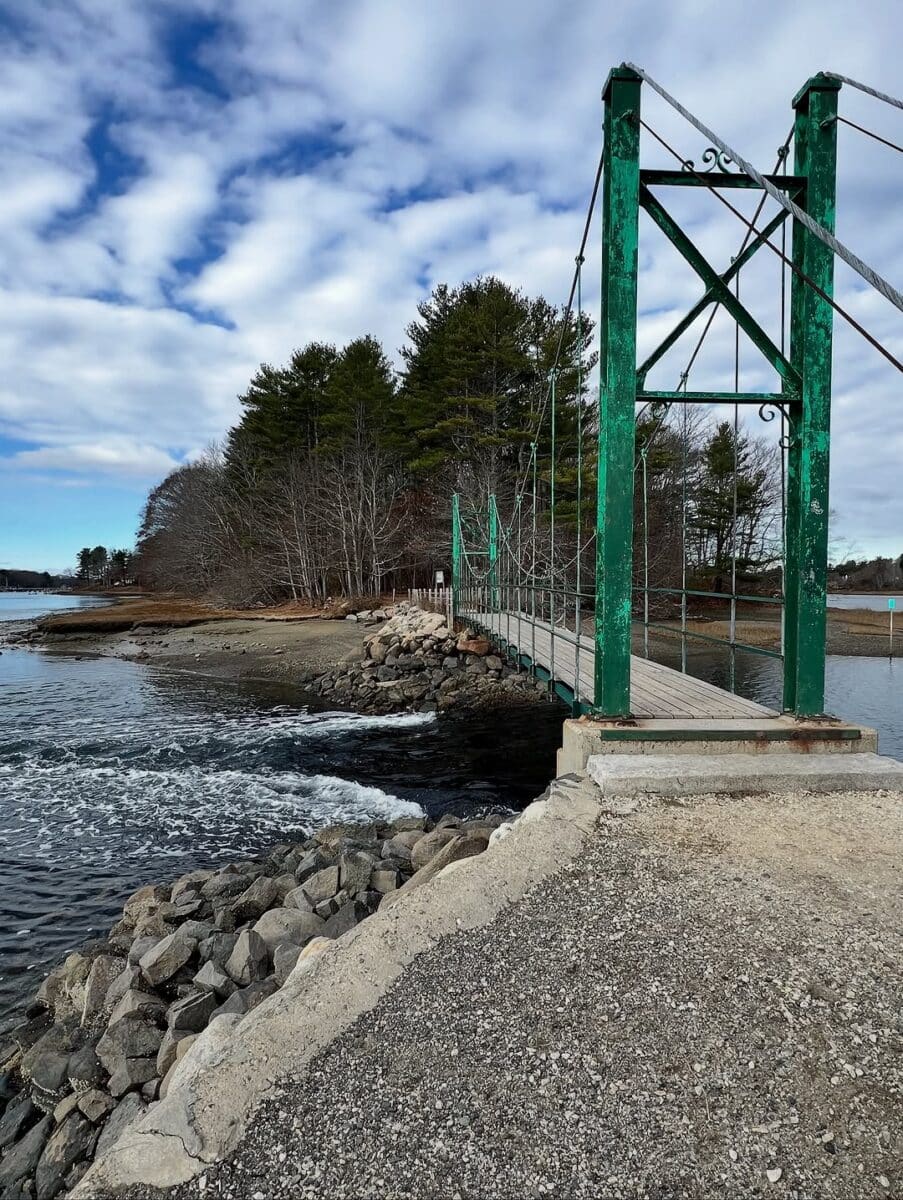
You’ll need to know where to look to find the Wiggly Bridge of York, because it hides in plain sight. The easiest access is off of Maine Route 103 (Lilac Lane) between Pine Island/Harris Island Roads and Barrell Lane.
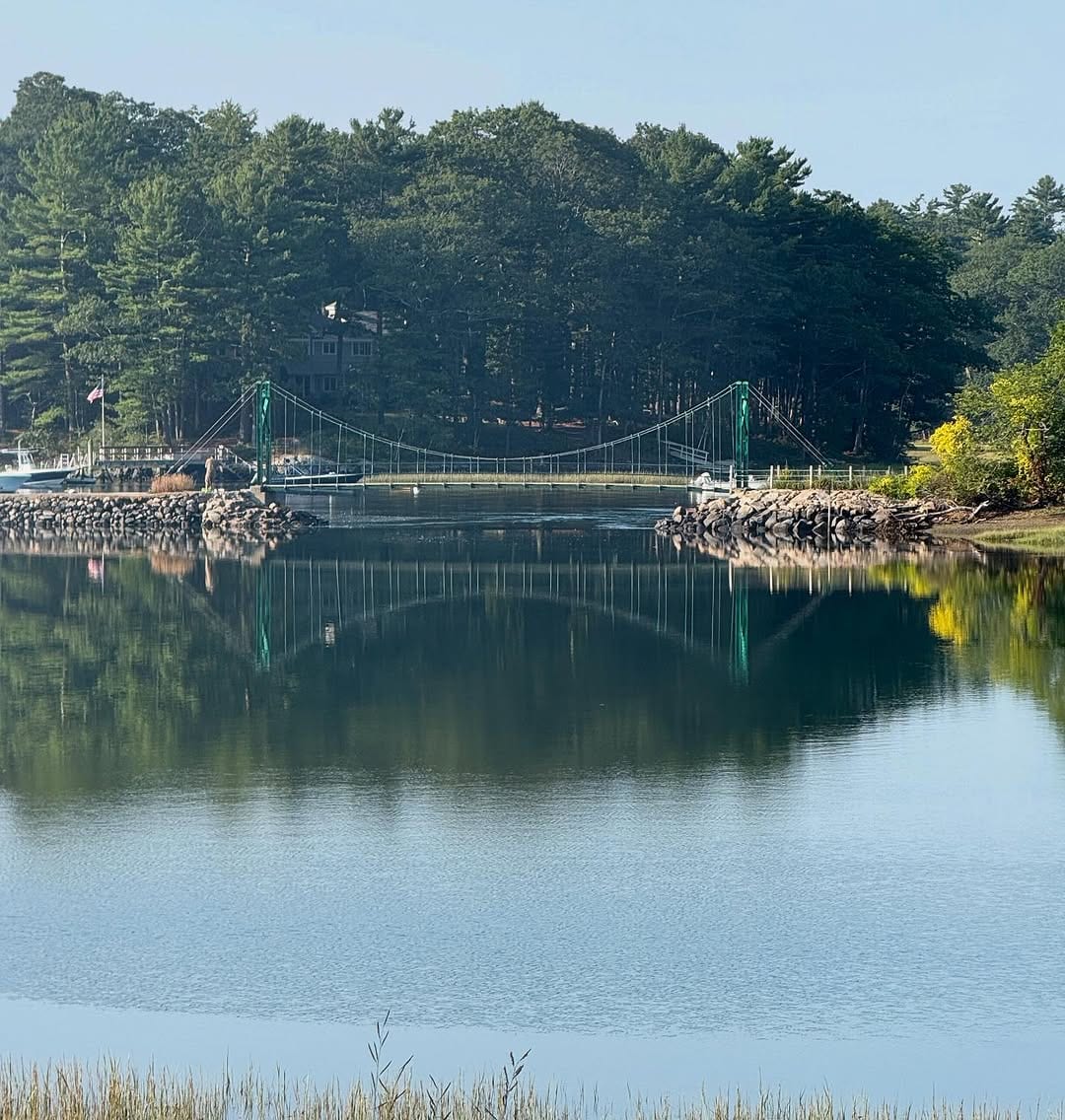
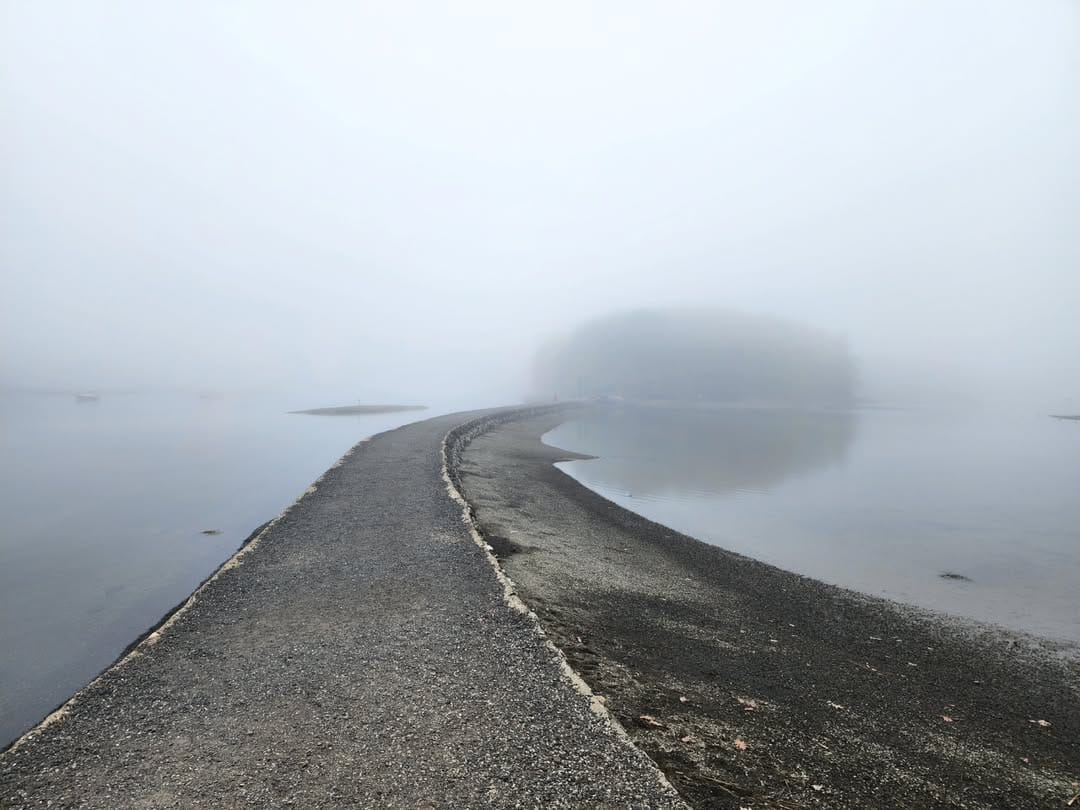
The Wiggly Bridge is located between York Village and York Harbor, part of the walkway that separates Barrells Millpond and the York River. The Wiggly Bridge connects Steedman Woods and Fisherman’s Walk, which eventually leads to York Harbor Beach and York’s Cliff Walk.
A small parking area is provided off of Lilac Lane near the walking path to the Wiggly Bridge, but it’s by permit only.
History of York’s Wiggly Bridge
How did such a small but dynamic bridge end up along a walking path along the York River? We’ve dug through historic documents to piece together the history, and it’s quite fascinating to see the evolution of this small stretch of water and land.
The First Dam Step of the Wiggley Bridge (1726–1790s)
By the early 1700s, York was booming and running out of water power. In 1726, a group known as the New Mills Company built a massive 600-foot dam across Meeting House Creek, creating one of New England’s largest tide-powered mill ponds. By 1727, the site housed sawmills, gristmills, and its own cargo boat, moving timber and grain in and finished goods out.
The system tripled York’s mechanical energy and ran year-round. For decades, it fueled local prosperity. The success of these tide mills reshaped York’s economy and permanently altered the landscape where the Wiggly Bridge now sits.
Resource Loss, War, and Business Decline (1790s–1859)
By the late 1700s, York’s forests were thinning, and timber exports slowed. Economic blows followed, including Jefferson’s embargo, the War of 1812, and a lingering depression. Jonathan Barrell inherited the mills in 1797, but profits never fully recovered.
As trade declined and resources dried up, the operation slowly collapsed. By the mid-1800s, the mills sat largely idle, deteriorating year by year. In 1859, Barrell’s sisters sold off the remaining mill rights to fund repairs to the family home, marking the end of the site’s industrial era.
The Ice Pond Experiment (1873–1887)
In 1873, brickmakers Norton and Leavett bought the property, hoping to turn the old mill pond into a commercial ice operation. The deep water made it a promising site, but little progress followed. Locals mostly used it as a swimming hole.
Frank Emerson purchased the pond in 1880 and tried again. He rebuilt the dam and added ice houses, but saltwater infiltration and poor freshwater flow sabotaged the plan. After his death in 1887, the ice venture collapsed, leaving behind a partially restored dam and another chapter of unrealized ambition.
Resort Growth and the Birth of Wiggly Bridge (1897–1930s)
In 1897, developers tried transforming the pond into a vacation-home community, but that plan fizzled. Instead, as York evolved into a summer resort, residents began using the old dam as a footpath to the country club (now the York Golf & Tennis Club).
What started as heavy colonial infrastructure quietly became one of York’s most charming shortcuts. By the 1920s, preservationists stabilized the structure and built a small bridge over the mill race.
The suspension bridge that would come to be known as Wiggly Bridge was first built in 1936. Local legend says that a group of Girl Scouts gave it the name since it “wiggled” when they walked across it.
Protecting the Wiggly Bridge for the Future
The Wiggly Bridge in York, also known throughout history as the Barrell Bridge or Barrell’s Bridge, was refurbished and reinforced in the 1990s and again in the late 2010s.
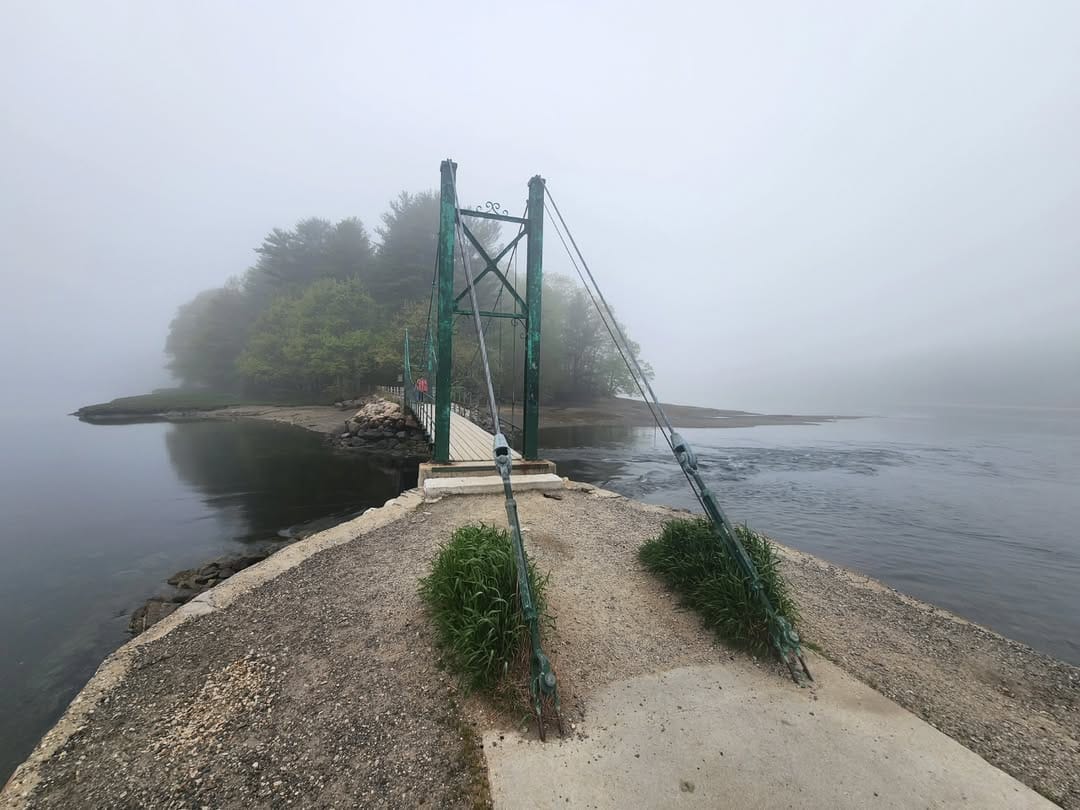
Guests approaching from Route 103 will walk the causeway, which is the former footprint of the dam, and then cross the Wiggly Bridge to get to Steedman Woods.
Pond created in 1726 at Meeting House Creek to provide power and a saw/grist mill.
How Big/Small is the Wiggly Bridge?
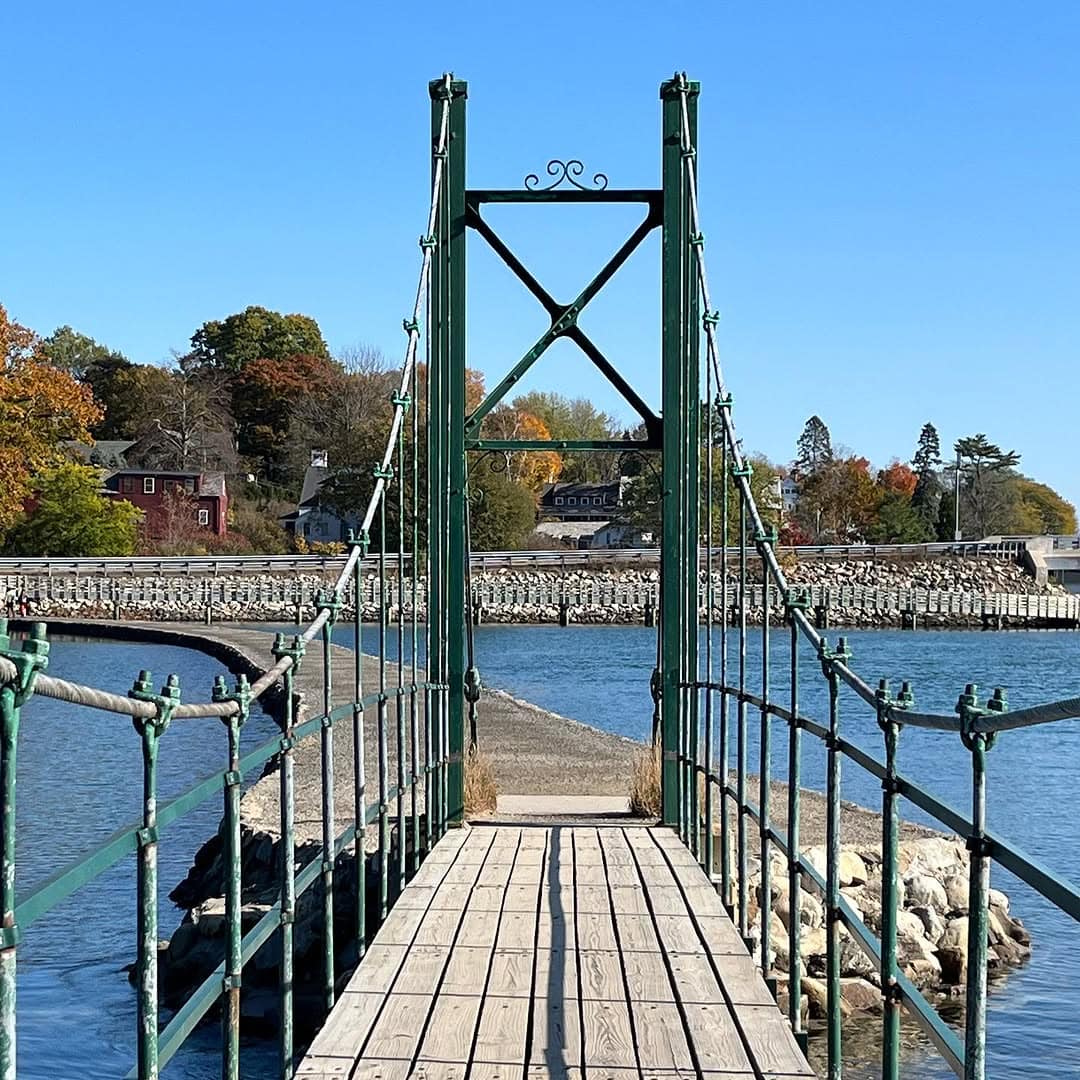
The Wiggly Bridge spans 75 feet. That’s about the length of a bowling alley lane. You can cross it in about 25 wiggly steps. As for the height, the tower stands about 20 feet tall. Even though it’s a short walk to cross the bridge, keep in mind that you’re walking on 300 years of industrial ambition.
How Much Does the Wiggly Bridge Wiggle?
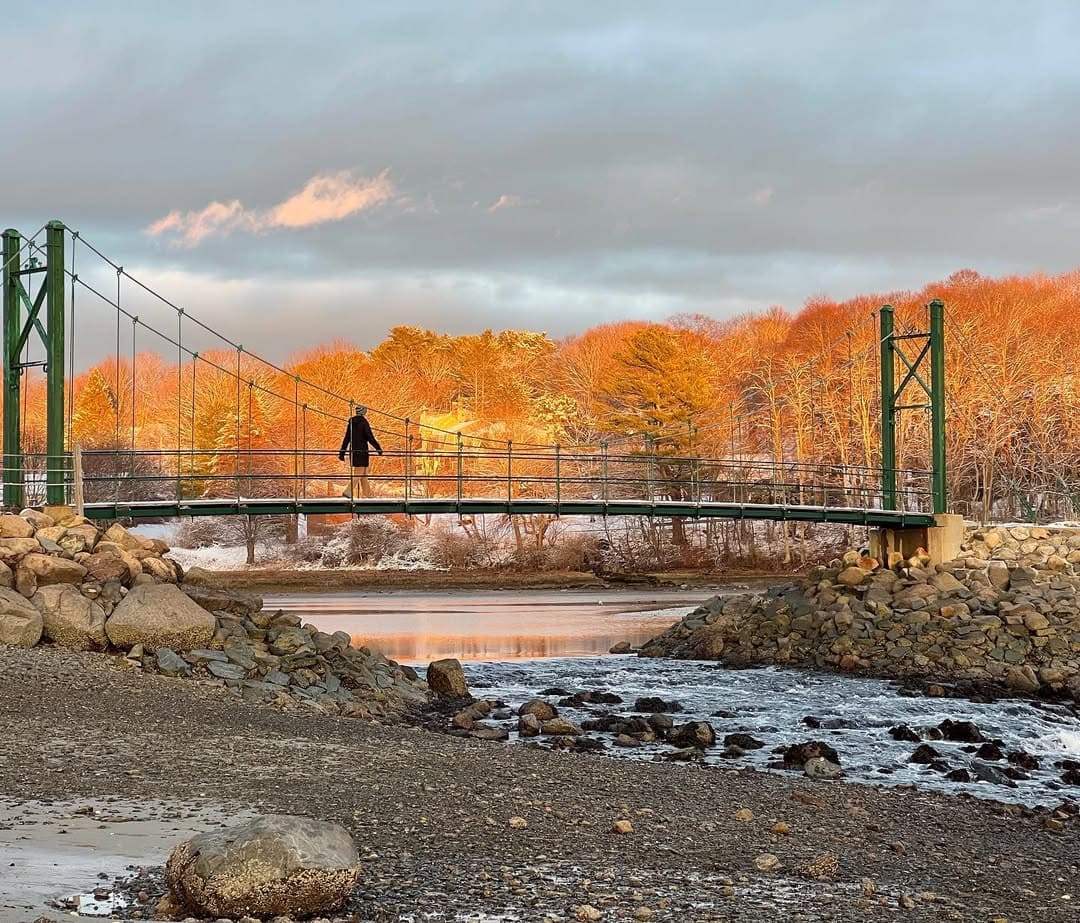
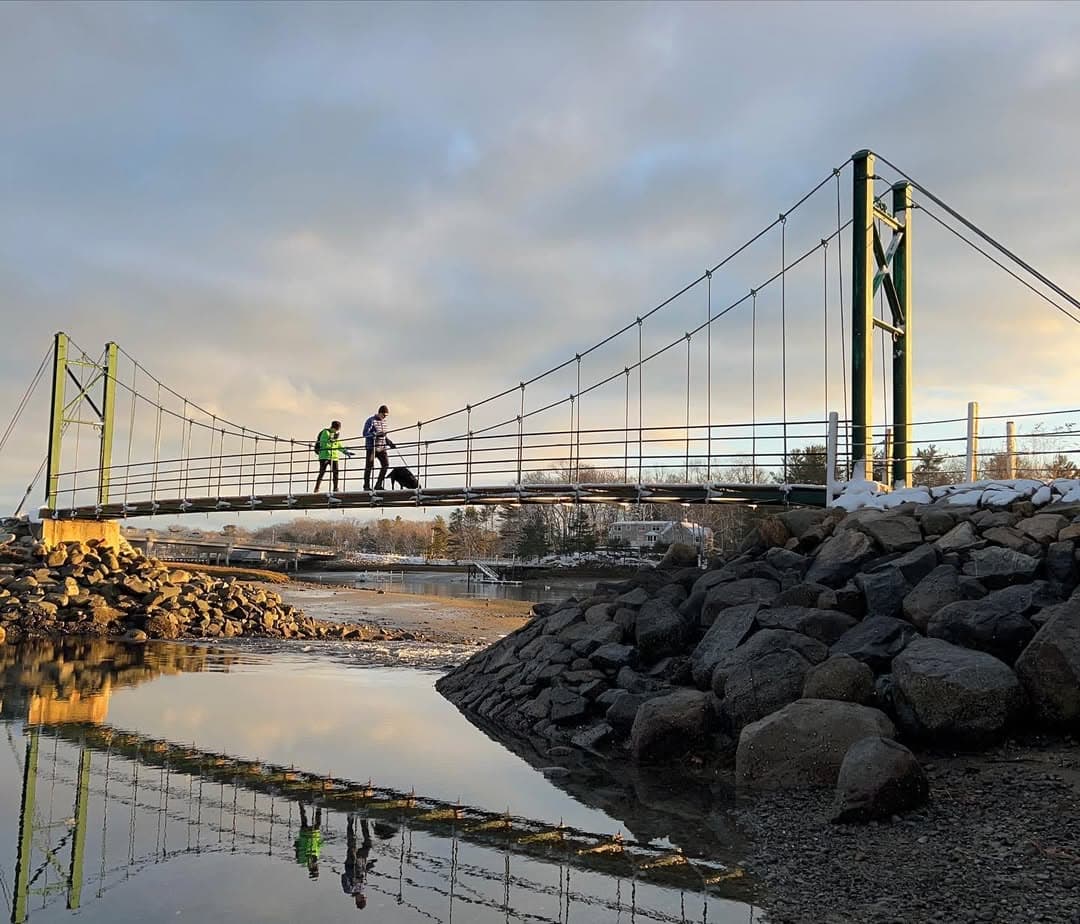
The Wiggly Bridge lives up to its name, but in a friendly way. When one person crosses, it gives a gentle bounce. Add a couple more people, and you’ll feel a soft side-to-side sway and a little vertical spring. Think boat dock, not roller coaster.
It’s just enough movement to make kids giggle, adults grab the rail, and avoid any fear of heights since the bridge is no more than 12 feet above the water, depending on the tide.
What Is Near the Wiggly Bridge of York?
One of the best parts about visiting the Wiggly Bridge is that it’s rarely a one-and-done stop. The walk to get there passes several historic sites, scenic coastal paths, and peaceful nature preserves, turning a simple bridge crossing into a full-on coastal ramble.
Steedman Woods
On the west side of the bridge sits Steedman Woods, a roughly 17-acre nature preserve gifted to the York Historical and Improvement Society in 1978 to be protected forever.
The trail network winds through coastal forest, wetlands, and gentle hills, offering about 1.5 miles of easy walking paths. It’s a calm, shaded escape just steps from York Harbor.
Fisherman’s Walk
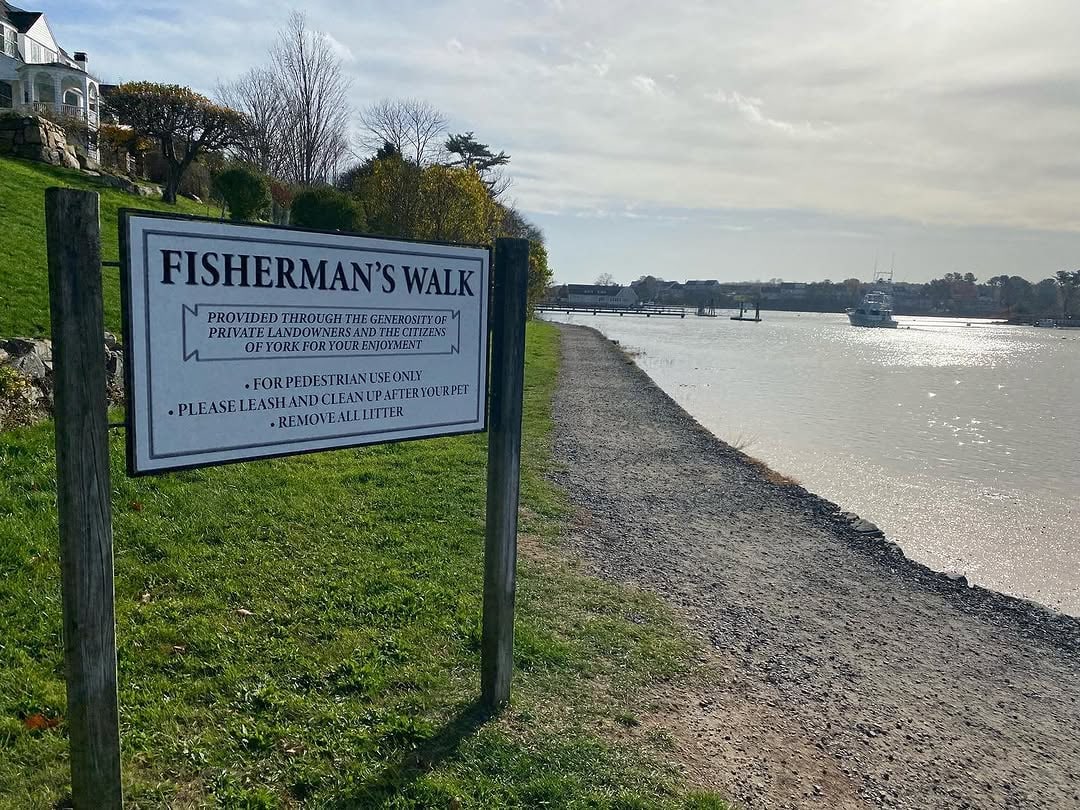
Fisherman’s Walk is one of York’s most scenic coastal paths, stretching about half a mile along the harbor between Route 103 and the Wiggly Bridge causeway. The walk follows the shoreline, offering front-row views of lobster boats, rocky ledges, salt marsh, and open ocean.
Once a working waterfront route used by fishermen, it’s now a peaceful footpath rich with harbor history, with postcard-worthy scenery. It’s flat, easy, and wildly photogenic, especially at sunrise and golden hour.
Historic York Village
Historic York Village sits about 0.7 miles from the Wiggly Bridge, making it an easy 10 to 15-minute walk with an option to explore Steedman Woods. This area holds some of Maine’s most important colonial landmarks, including the Old Gaol, the First Parish Church, and the Sayward-Wheeler House.
York Harbor Beach
York Harbor Beach is roughly 0.4 miles from the Wiggly Bridge, depending on your route, and pairs perfectly with a bridge walk. This sandy crescent offers calm swimming, classic Maine beach vibes, and sweeping ocean views framed by rocky headlands. It’s smaller and quieter than Long Sands Beach.
From here, you can loop back toward Fisherman’s Walk, turning the whole outing into a breezy coastal circuit.
York’s Cliff Walk
York’s Cliff Walk offers one of the most dramatic coastal strolls in southern Maine, tracing the rocky shoreline between York Harbor Beach and Long Sands Beach. The full walk runs about 1 mile one way, depending on where you start and stop, and delivers nonstop ocean views, crashing surf, and some seriously photogenic cliffside scenery.
That said, parts of the trail have taken a beating from major coastal storms in recent years, leading to periodic closures and repairs. Check local updates before heading out.
Is a Visit to York’s Wiggly Bridge Worth It?
One of the reasons we wanted to do such a deep dive into the history here is so you can appreciate more than the novel nature of America’s smallest suspension bridge. Now you know it’s more than just a walk across the walk with some wiggles. It shows that history’s footsteps are sometimes uneven but always lead to a place worth visiting.
If you need a place to savor the moment and share memories, try visiting the Wiggly Bridge Distillery off of Route 1 in York Corner. Plus, if you like the “wiggle” of the bridge but want to go find a bigger bridge, try the Androscoggin Swinging Bridge that connects Topsham and Brunswick. That one sways and is almost five times longer than the Wiggly Bridge of York.